
This weekly crypto market update gives you a simple, clear, actionable breakdown of what mattered in crypto over the past 7 days — and what to watch next.
1) Market Snapshot (Week Ending 5 January 2026)
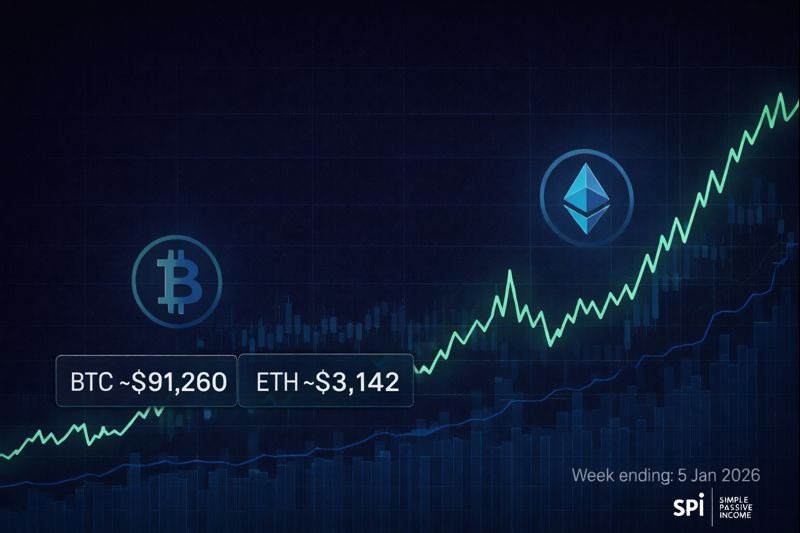
Bitcoin (BTC): Trading around $91,260 at the time of writing. The key theme is volatility continuation — sharp moves, fast reversals, and fragile structure.
Ethereum (ETH): Holding near $3,142 at the time of writing. ETH is stabilising, but it is still reacting to macro risk sentiment and liquidity conditions.
SPI takeaway: This is not a “relaxed grind up” environment. Instead, it’s a caution market — where risk management and position sizing matter more than predictions.
2) Top Crypto Stories (Past 7 Days)
1. Spot BTC & ETH ETFs flipped back to strong inflows to start the year
What happened: U.S. spot Bitcoin and Ethereum ETFs opened 2026 with strong net inflows on the first trading day of the year, reversing year-end outflows.
Why it matters: ETF flows are one of the cleanest “institutional temperature checks.” Strong inflows can stabilise price during shaky periods, while outflows can accelerate downside when fear returns.
Most impacted: BTC, ETH, TradFi crypto access narrative
External source: The Block — ETF inflow data (SoSoValue)
2. UK crypto tax reporting rules moved from “coming” to “live”
What happened: New reporting standards tied to the OECD’s Cryptoasset Reporting Framework (CARF) moved into force for participating jurisdictions, pushing exchanges/platforms to collect and report user transaction details.
Why it matters: This is part of the global trend: crypto is being pulled into the mainstream compliance system. It impacts user privacy, exchange onboarding, and how capital moves across borders.
Most impacted: Centralised exchanges, crypto platforms serving UK/EU users, stablecoin rails, on/off-ramps
External source: Financial Times — CARF reporting goes live
3. Trust Wallet issued an urgent security notice for its browser extension
What happened: Trust Wallet published a security notice affecting Browser Extension version 2.68 and urged users to disable/upgrade to a safe version.
Why it matters: Wallet risk is increasingly software supply-chain risk. Even “good self-custody habits” can fail if the wallet software environment is compromised.
Most impacted: Wallet users (especially browser extensions), DeFi users, retail security narrative
External source: Trust Wallet — Official security notice
4. Ethereum scaling path: Blob upgrades stay in focus (L2 fee pressure)
What happened: Ethereum’s Fusaka upgrade path includes scheduled “Blob Parameter Only” forks designed to increase blob capacity (a key driver of rollup costs).
Why it matters: More blob capacity generally supports cheaper L2 transactions. If executed smoothly, it strengthens Ethereum’s “rollups + data availability” thesis, and helps keep users on ETH-aligned ecosystems instead of alternative L1s.
Most impacted: ETH, L2s (ARB, OP, BASE ecosystem), rollup fee narrative
External source: Ethereum Foundation — Fusaka + BPO schedule
5. Market tone: “range with traps” conditions continued into early January
What happened: Price action across majors stayed sensitive — the type of market where quick dips and rebounds punish both late longs and late shorts.
Why it matters: This environment rewards patience. It also increases the value of following liquidity indicators (ETF flows, stablecoin movement, funding/open interest) rather than vibes.
Most impacted: BTC, ETH, high-beta altcoins, leverage traders
6. Macro still matters: risk appetite remains selective
What happened: Broader risk markets have been firm in places, but crypto sentiment remains more cautious after late-2025 drawdowns.
Why it matters: When macro is “selective,” crypto tends to outperform only when liquidity conditions improve and narrative catalysts are strong (ETF inflows, major upgrades, or policy clarity).
Most impacted: BTC, ETH, crypto equities, altcoins dependent on risk-on flows
3) ETF, Flows & Liquidity Watch
- ETFs: Early January flows improved versus year-end, which helps the market absorb volatility.
- Liquidity: Still a “headline-sensitive” market — one risk event can move price quickly.
- Derivatives: Treat leverage carefully; volatility continuation means liquidations can return fast.
4) Security & Risk Corner (This Week’s Priority)
Big idea: Your wallet security is only as strong as your device and wallet software environment.
- Prefer hardware wallet signing for meaningful balances.
- Be cautious with browser extensions; keep software updated and minimize exposure.
- Separate “daily browsing” from “wallet activity” (different browser profile or device).
5) SPI Action Steps (Volatility Continuation & Caution Plan)
- 1. Position size down: Keep risk small enough that volatility doesn’t force emotional decisions.
- 2. Watch flows, not noise: ETF flow direction matters more than influencer timelines.
- 3. Avoid revenge trading: In choppy markets, missed moves are cheaper than bad entries.
- 4. Upgrade security this week: Browser wallet hygiene + device hygiene = huge edge.
- 5. Keep it simple: If you’re unsure, focus on BTC/ETH and structured DCA instead of chasing the highest APY.
Want the safer DeFi framework (step-by-step)? Start here: DeFi Safety Checklist .
If you’re starting small, this action plan helps you build consistency: How to Start Earning Passive Income with Even R100 .
6) Sources
This briefing references reporting and official releases from The Block (ETF data), the Financial Times (UK CARF reporting), the Ethereum Foundation (upgrade schedule), and Trust Wallet (security notice).
- The Block — Spot BTC/ETH ETF flows
- Financial Times — CARF reporting goes live
- Ethereum Foundation — Fusaka & blob schedule
- Trust Wallet — Security notice
Nothing in this article is financial advice. It’s educational market intelligence to help you think clearly and act safely.
Leave a Reply