
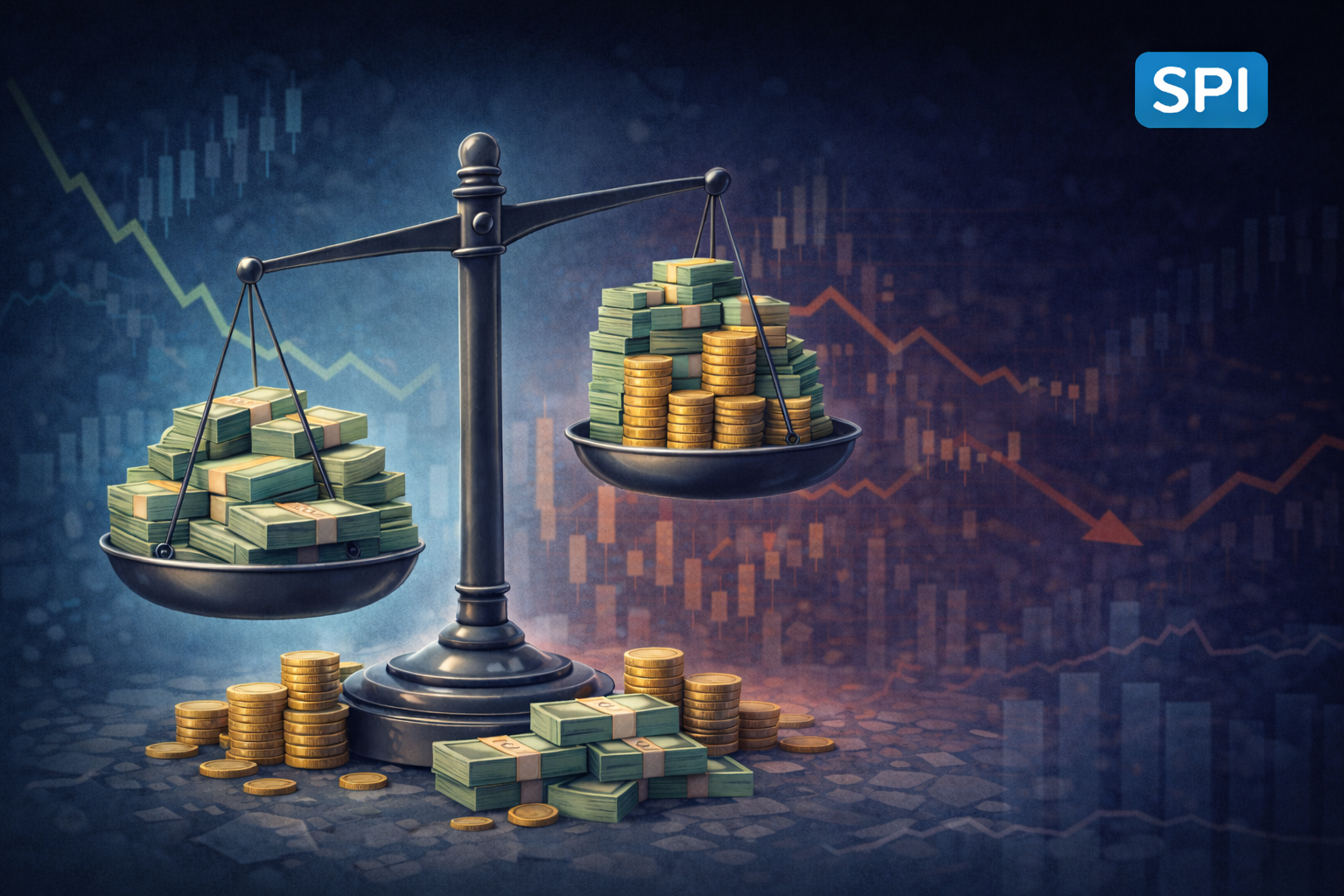
Cash feels safe. But too much of it can quietly cost you.
After volatile markets, many investors instinctively increase their cash positions. On the surface, that feels responsible, defensive, and prudent.
Sometimes, it is.
However, there’s a real difference between strategic liquidity and fear-based hoarding.
In 2026 — with inflation still relevant, markets cyclical, and asset classes moving at different speeds — the real question isn’t whether you should hold cash.
The real question is: how much is intentional — and how much is emotional?
Why Cash Feels Safer Than It Actually Is
Cash protects you from volatility, and that part is true. However, it doesn’t protect you from inflation, and it doesn’t participate in recoveries.
Historically, markets often begin recovering before economic headlines improve — a dynamic explained in The Liquidity Cycle.
In practice, by the time things finally “feel stable,” asset prices are often already higher. As a result, excessive cash quietly becomes opportunity cost.
Cash reduces volatility — but it also reduces momentum.
Research from Vanguard shows that missing just a handful of the market’s strongest days can significantly damage long-term returns. Importantly, those days often occur during periods of maximum uncertainty — precisely when investors are sitting in cash.
The Three Types of Cash (Most People Only Know One)
1. Emergency Cash
This is non-negotiable. It covers job loss, medical events, urgent repairs, or income disruptions.
For most people, the typical range is 3–6 months of essential expenses.
2. Operational Cash
This is money needed for near-term expenses, planned purchases, or tax obligations. In other words, it is short-horizon liquidity with a clear job.
3. Strategic Cash
This is cash held intentionally to deploy during opportunities — market dips, new investments, or rebalancing moments.
On one hand, emergency cash protects survival. On the other hand, strategic cash creates optionality. If you confuse the two, you often end up with either unnecessary stress or avoidable stagnation.
The Difference Between Stability Cash and Fear Cash
Stability cash is intentional. It covers emergencies, obligations, and psychological comfort.
By contrast, fear cash accumulates emotionally. It sits idle without a defined purpose.
The first builds resilience. Meanwhile, the second often builds regret.
So How Much Cash Is Enough?
Ultimately, the answer depends less on the market and more on your personal risk structure.
If Your Income Is Stable
- Liquidity needs are generally lower
- Predictable cash flow reduces the need for a very large buffer
- For many people, closer to 3 months of expenses may be sufficient
If Your Income Is Volatile
- Liquidity needs usually rise
- Commission, freelance, or business income can fluctuate sharply
- In that case, 6–12 months of expenses may be more appropriate
If Your Portfolio Is High Volatility
- Crypto-heavy or growth-heavy portfolios increase emotional pressure
- As a result, extra liquidity can reduce the urge to panic sell
Even so, this is where many investors get it wrong.
They raise cash without a deployment plan.
Over time, that turns liquidity into paralysis.
Join the Weekly SPI Newsletter
Practical insights. Real opportunities. Zero fluff.
Cash as Optionality (The Strategic View)
Put simply, strategic cash is not about hiding. Instead, it’s about having the power to act.
Optionality means being able to deploy capital when opportunities appear — without needing to sell assets at bad times.
That said, optionality only works if you define deployment rules in advance.
- Will you invest after a 10% market pullback?
- Will you rebalance when allocations drift?
- Will you deploy gradually or in tranches?
Without clear rules, waiting can quietly become permanent.
If hesitation feels familiar, revisit How to Invest When You’re Afraid of Losing Money.
A Practical Liquidity Framework (Real-World Guide)
Step 1 — Secure Survival
First, make sure your emergency fund is fully funded.
Step 2 — Cover Near-Term Needs
Next, keep planned expenses in liquid, low-risk instruments.
Step 3 — Define Strategic Reserve
Then decide how much optional capital you want available for market opportunities.
Step 4 — Invest the Rest
Finally, let capital that isn’t needed soon continue compounding.
Liquidity should protect your life — not pause your future.
2026 Market Reality: Cycles Reward Balance
In 2026, markets aren’t operating in extremes of panic or euphoria. Instead, they’re moving through cycles.
These cycles tend to reward balanced positioning.
At one extreme, too much cash often reflects uncertainty. At the other, too much exposure often reflects overconfidence.
In most cases, the middle ground is more durable.
Practical mindset for 2026: Keep enough cash to stay calm. At the same time, keep enough exposure to stay compounding.
A Smarter Allocation Question
Instead of asking, “What percentage should I hold?” ask better questions:
- If markets rise 20%, will I regret being too defensive?
- If markets fall 15%, will I panic?
Your answers reveal whether your liquidity is balanced.
After all, allocation is not about predicting direction. Rather, it’s about managing behavior.
Want structured investing insights without hype?
Final Thoughts
Cash is not a strategy by itself — it’s a tool.
Used intentionally, it provides resilience and optionality. Used emotionally, it can quietly stall progress.
In 2026, the goal isn’t maximum defense or maximum aggression.
Instead, it’s balance.
Keep enough liquidity to stay rational. Then keep enough exposure to stay compounding.
Disclaimer: This article is for educational purposes only and does not constitute financial advice.
Comments
2 responses
I really liked this article. It’s gets right to the point on how people view money. I think this article should be available to teens that are entering High School. They need to be aware of how they should view money. Teens mainly experience how to handle money by watching parents or other Family members. To have a different point of view can be essential in their life as they start to transition into adulthood. The Final thoughts of this article really brings everything about money together. How to be intentional, resilient, and opportunistic. To use money like a tool for leveraging buying power can relieve emotional stress.
Thank you for your wonderful comment, Samuel. I appreciate you popping in. It all boils down to financial education. In most cases we complicate this principle or ignore it altogether.