
TL;DR: Use this checklist and scoring system to evaluate any DeFi or earning platform before investing. Focus on where yield comes from, always test withdrawals, and never scale too quickly.
Why This DeFi Checklist Matters
DeFi can generate real passive income — but it can also destroy capital just as quickly.
The difference is rarely luck.
In most cases, it comes down to how decisions are made before money is committed.
Too many people focus on returns first. However, returns only make sense once you understand the system behind them.
This checklist is designed to shift your thinking.
Instead of asking “How much can I earn?”, you start asking:
- Where does the yield actually come from?
- What risks exist behind the scenes?
- Can I exit safely if needed?
That shift alone can save you from most avoidable losses.
How to Use This Guide
This framework applies to:
- DeFi protocols (staking, lending, liquidity pools)
- CeFi platforms (custodial yield apps)
- Automation tools and yield strategies
Each category contributes to your overall risk score.
The goal is not perfection — it’s awareness.
SPI DeFi Assessment Rubric (0–100)
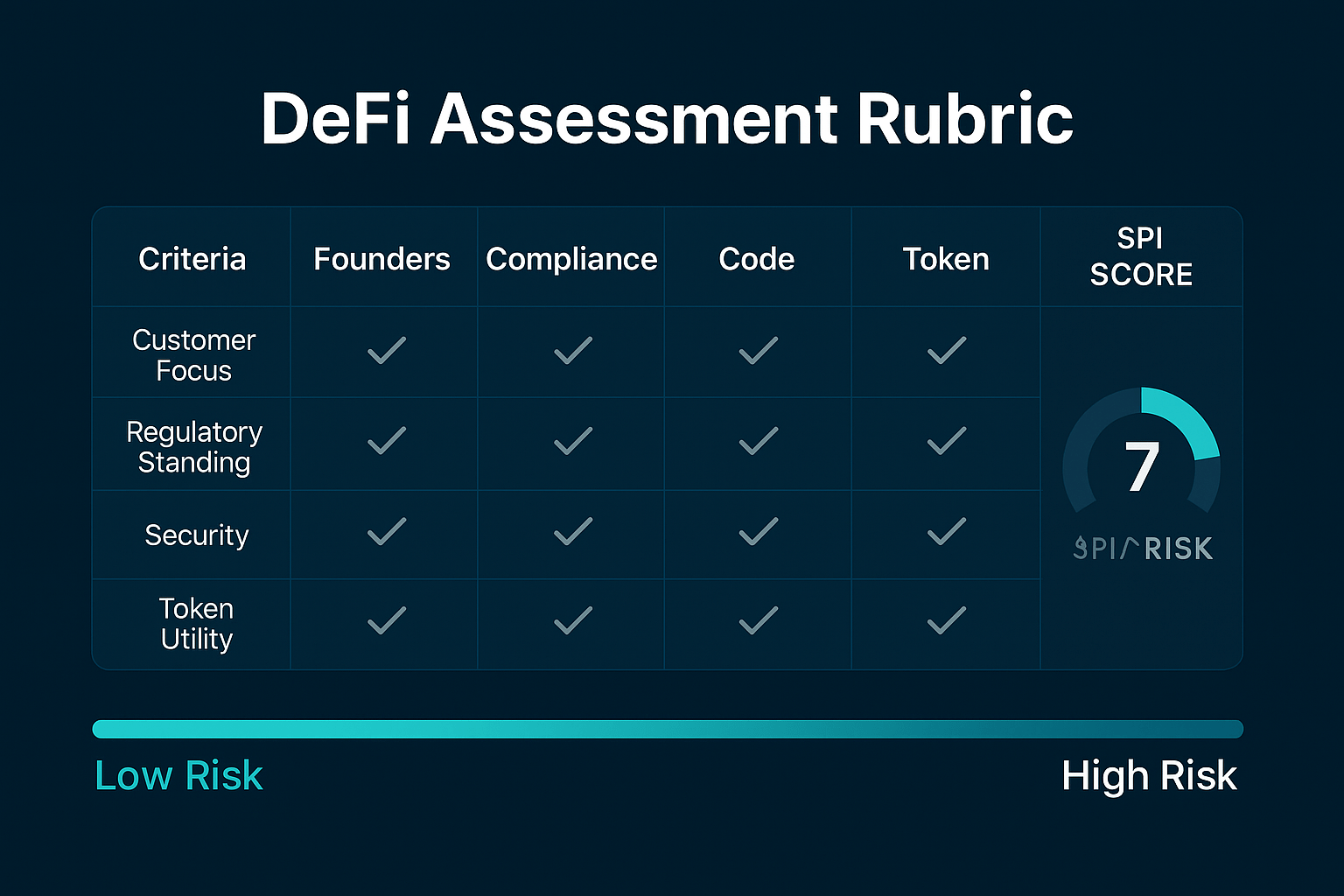
SPI DeFi Assessment Rubric — green (80–100 Trusted), yellow (60–79 Moderate), red (0–59 High Risk).
Each platform is evaluated across multiple categories.
Instead of relying on instinct, you build a structured score.
This reduces emotional decisions and improves consistency.
Assessment Categories
- Team Transparency & Track Record
- Legal / Regulatory Posture
- Smart Contract Security
- Yield Source Clarity
- Tokenomics
- Liquidity & Exit Options
- Communication
- Red Flags
- Withdrawal Testing
- Performance Tracking
Before You Start: Understand This First
High yield does not automatically mean a good opportunity.
In many cases, high returns exist because risk is hidden — not removed.
For example, some platforms offer attractive APYs by emitting tokens rapidly. However, if those tokens lose value, the yield becomes meaningless.
Because of this, the most important question is not how much you earn — but how the system generates that return.
The 10 Steps to DeFi Safety
1. Verify the Founders
Start with the people behind the project.
A legitimate team usually leaves a footprint — LinkedIn profiles, GitHub contributions, or past projects.
If no trace exists, risk increases significantly.
That doesn’t automatically mean a project is unsafe — but it removes accountability.
2. Check Regulatory Position
Look for signs of structure.
This includes terms of service, legal disclaimers, or regional restrictions.
Interestingly, restrictions are often a positive sign. They indicate awareness of compliance rather than avoidance.
3. Review Smart Contract Audits
This is one of the most critical steps.
Smart contracts control how funds move. If they fail, funds can be lost.
Look for audits from firms such as CertiK, Trail of Bits, or OpenZeppelin.
More importantly, check whether issues are resolved — not just identified.
4. Analyze Tokenomics
Token design directly affects sustainability.
High emissions often create temporary rewards but long-term pressure on price.
Because of this, always ask:
- Is demand real or artificial?
- Are rewards sustainable?
- What happens when incentives slow down?
5. Assess Liquidity
Liquidity determines whether you can exit.
Without it, your funds may be technically accessible but practically stuck.
Use tools like DeFiLlama to track TVL and trends.
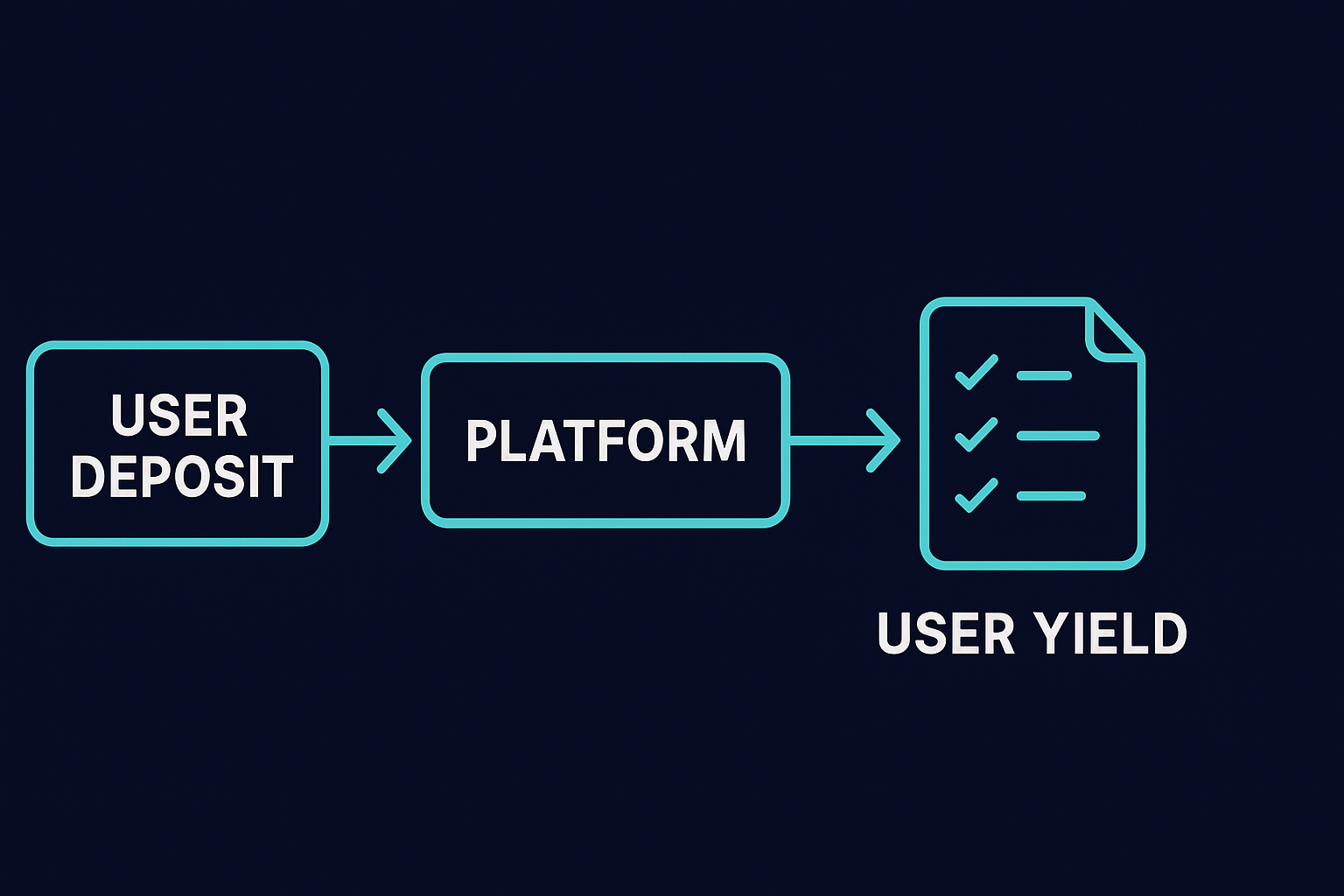
Yield flow — deposits → strategies → rewards.
6. Watch for Red Flags
Some patterns repeat across failed projects.
- Guaranteed returns
- Referral-heavy systems
- Forced compounding
If returns depend mainly on new users, risk increases significantly.
7. Evaluate Community & Transparency
Community reflects reality.
Join Discord or Telegram and observe:
- Are questions answered clearly?
- Is communication consistent?
- Is criticism allowed?
A healthy project communicates openly.
Want Safer DeFi Strategies Like This?
I break down DeFi step-by-step, focusing on risk management and real-world application.
Join the Weekly SPI Newsletter
Practical insights. Real opportunities. Zero fluff.
8. Test Small First
Before scaling, test everything.
Deposit a small amount and try:
- Deposits
- Withdrawals
- Fee structure
This step alone filters out many risky platforms.
9. Track Performance
Once invested, track results.
Consistency matters more than spikes.
Sudden yield increases can indicate instability.
10. Reassess Regularly
DeFi changes quickly.
A strong platform today may weaken tomorrow.
Re-evaluate regularly and adjust when needed.
Recommended Research Tools
- DeFiLlama — liquidity tracking
- CoinGecko — token data
- Etherscan — contract verification
- Audit reports — risk analysis

Final Thoughts
DeFi is powerful — but only when approached correctly.
The goal is not to avoid risk completely.
The goal is to understand it.
Better decisions lead to better outcomes over time.
Disclaimer: Educational purposes only. Not financial advice.