
If you want to build wealth beyond the stock market, fractional alternative investments offer a unique and powerful path. When you begin investing, experts usually give the same basic advice. They tell you to buy index funds. They tell you to buy bonds. They eventually tell you to save money for a rental property down payment.
However, inflation constantly eats into traditional yields. Stock market volatility frustrates many long-term planners. Consequently, investors actively seek new ways to generate steady cash flow.
We recently discussed DePIN hardware. We also explored tokenized real estate. Those articles explain how blockchain technology breaks down physical assets into affordable digital pieces. But you do not need cryptocurrency to use this fractional ownership model.
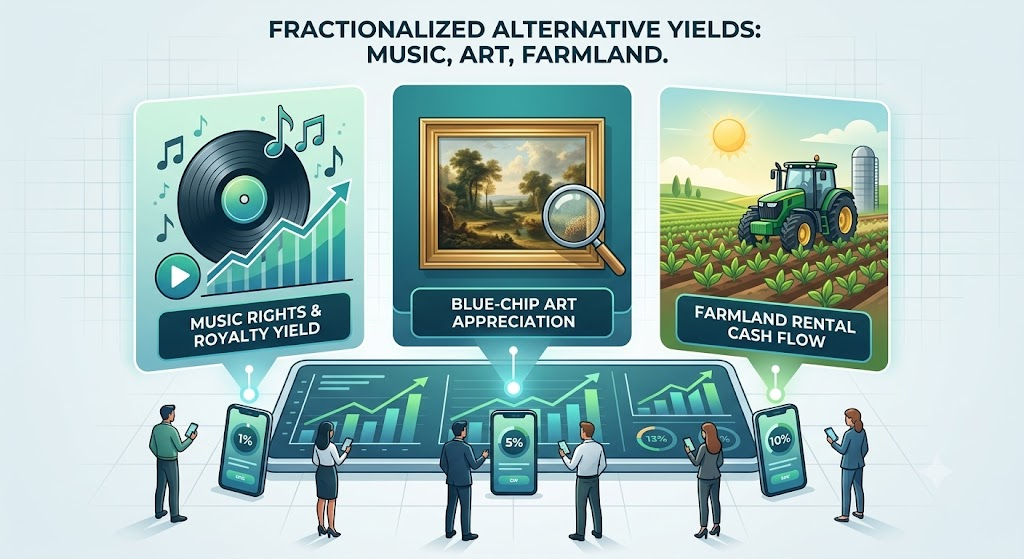
A massive wave of alternative investment platforms completely changes the game today. Everyday investors can now buy shares in premium asset classes. Historically, multi-million dollar minimums locked these assets away. Only hedge funds and ultra-wealthy individuals could access them. Let’s explore how you can start earning passive income from music catalogs, commercial farmland, and blue-chip art.
How Fractional Alternative Investments Actually Work
Fractional alternative investments take a high-value, illiquid asset and divide the ownership legally. Think of a $5 million Picasso painting. Think of a 200-acre commercial farm. These platforms chop the asset into thousands of small, affordable shares.
But how does this work behind the scenes without a blockchain? Platforms rely on specific legal structures. They use Special Purpose Vehicles (SPVs) or Limited Liability Companies (LLCs). When a platform offers a farm to investors, they create a new LLC. This LLC holds the exact legal title to that single farm.
The platform then files necessary paperwork with the SEC. They typically use a Regulation A+ or Regulation D exemption. This filing allows them to issue LLC shares to the public. When you invest $1,000, you do not just hand the platform money. You actually buy true equity in the LLC that owns the physical asset.
These assets provide non-correlated returns. This remains their primary appeal. Their value and income do not move perfectly in sync with the S&P 500. A stock market crash will not stop people from streaming hit songs on Spotify. It will not stop people from eating food grown on commercial farms. Fractional alternative investments provide a vital buffer against traditional financial shocks.
Earning Cash Flow from Music Royalties
Music rights represent one of the most fascinating alternative asset classes available today. Historically, only major record labels had enough capital to purchase hit song rights. Now, digital marketplaces like Royalty Exchange and Sonomo change this dynamic entirely. They let retail investors purchase fractional ownership in music catalogs. This gives you a direct, legal claim on the revenue a song earns.
You earn passive income whenever that song generates revenue. This income comes from three primary sources.
- Streaming and Performance: Platforms pay royalties every time a listener plays the song on Spotify, Apple Music, or the radio.
- Mechanical: Fans generate these royalties when they buy physical sales like vinyl records or CDs.
- Synchronization (Sync): Studios trigger large payouts when they license the song for a television show, movie, video game, or commercial.
These payouts tie directly to listening activity. They completely ignore overall economic conditions. Therefore, music royalties offer highly predictable cash flow. Distributors pay these royalties “off the top.” They send checks directly to rights holders before labels or managers argue over profits. Investors treat music catalogs like digital dividend stocks. They often target strong annual yields that easily beat traditional savings accounts.
Join the Weekly SPI Newsletter
Practical insights. Real opportunities. Zero fluff.
Investing in Commercial Farmland
Commercial farmland offers incredibly stable historical returns for investors who prefer tangible physical assets. The global population keeps growing steadily. Meanwhile, the amount of arable land shrinks every year. This massive supply and demand imbalance makes productive soil highly valuable.
Platforms like AcreTrader democratize this space for everyday people. AcreTrader rejects about 95% of the farms they review. They only package the absolute highest quality farms into an LLC. Investors usually need a minimum investment around $10,000 to participate on their platform.
The passive income mechanism here remains straightforward and truly passive. The LLC rents the land to professional tenant farmers. These farmers pay cash rent upfront before the planting season begins. This upfront payment entirely removes crop yield risk for the investor. As a shareholder, you receive your proportional share of that rental income. The platform distributes this as an annual cash dividend. Historically, these premium farms yield between 3% and 5% in pure cash flow.
But cash flow only tells half the story. You also benefit from the long-term appreciation of the land itself. The target holding period usually lasts 5 to 10 years. At the end of that term, the platform sells the farm. They distribute the net proceeds pro-rata to the shareholders. This final payout includes the newly appreciated value of the land.
Blue-Chip Art for Long-Term Appreciation
Music and farmland focus heavily on generating monthly or annual cash flow. Fine art offers a pure capital appreciation play instead. Contemporary blue-chip art historically outperforms the broader stock market. However, the barrier to entry always felt astronomically high. You cannot simply buy a fraction of a painting at an elite auction house.
Platforms like Masterworks solve this problem by securitizing multi-million-dollar artworks. They buy paintings from famous artists like Banksy, Basquiat, and Picasso. They file an offering circular with the SEC. This allows anyone to invest with minimums often as low as $500 or $1,000.
A painting does not generate a monthly dividend like a rental property. Instead, the platform securely holds the artwork in a climate-controlled vault. Their expert research team constantly monitors the global art market. They typically wait for a target period of 3 to 10 years. Once market conditions peak, they sell the painting.
Investors receive their share of the profits after standard fees. Masterworks charges a 1.5% annual management fee. They also take 20% of the final profits. This closely mirrors a traditional hedge fund fee structure. This investment requires immense patience. But it offers incredible exposure to a resilient luxury asset class. You no longer need a billionaire’s bankroll to participate in the art world.
The Hidden Risks of Fractional Alternative Investments
Fractional alternative investments offer incredible portfolio diversification. Yet, they require a completely different mindset than trading stocks or crypto. Many beginners make a massive crypto bull market mistake. They incorrectly assume they can liquidate every investment for cash in seconds.
Alternative investments remain inherently illiquid by design. When you buy a share of a farm or a painting, you lock your capital away. You should assume your money stays locked for the entire 5 to 10-year holding period. Some platforms develop secondary trading markets to help investors sell early. Masterworks and Sonomo both offer these features. However, these secondary markets often suffer from extremely low trading volume. If you need cash immediately, you might have to sell your shares at a steep discount just to find a buyer.
You also take on significant platform risk. You rely entirely on these companies to manage the asset properly. They must accurately value the art. They must vet the tenant farmers thoroughly. They must efficiently distribute the music royalty payouts. What happens if a platform goes bankrupt? The underlying asset still belongs to the LLC shareholders. But navigating the legal mess to retrieve your money will take immense time and effort. Always utilize the best research tools to investigate a platform’s historical track record before investing.
You must also consider the tax implications. The IRS treats music royalties as ordinary income. Alternatively, art sales often trigger capital gains taxes. You should always consult a certified professional to understand your specific tax liabilities before investing.
Fractional alternative investments should never replace your emergency fund. They should not replace your core index fund strategy. But they offer incredible utility for advanced wealth building. If you want to build a truly resilient, diversified passive income portfolio, buying pieces of the real economy remains a powerful strategy.