
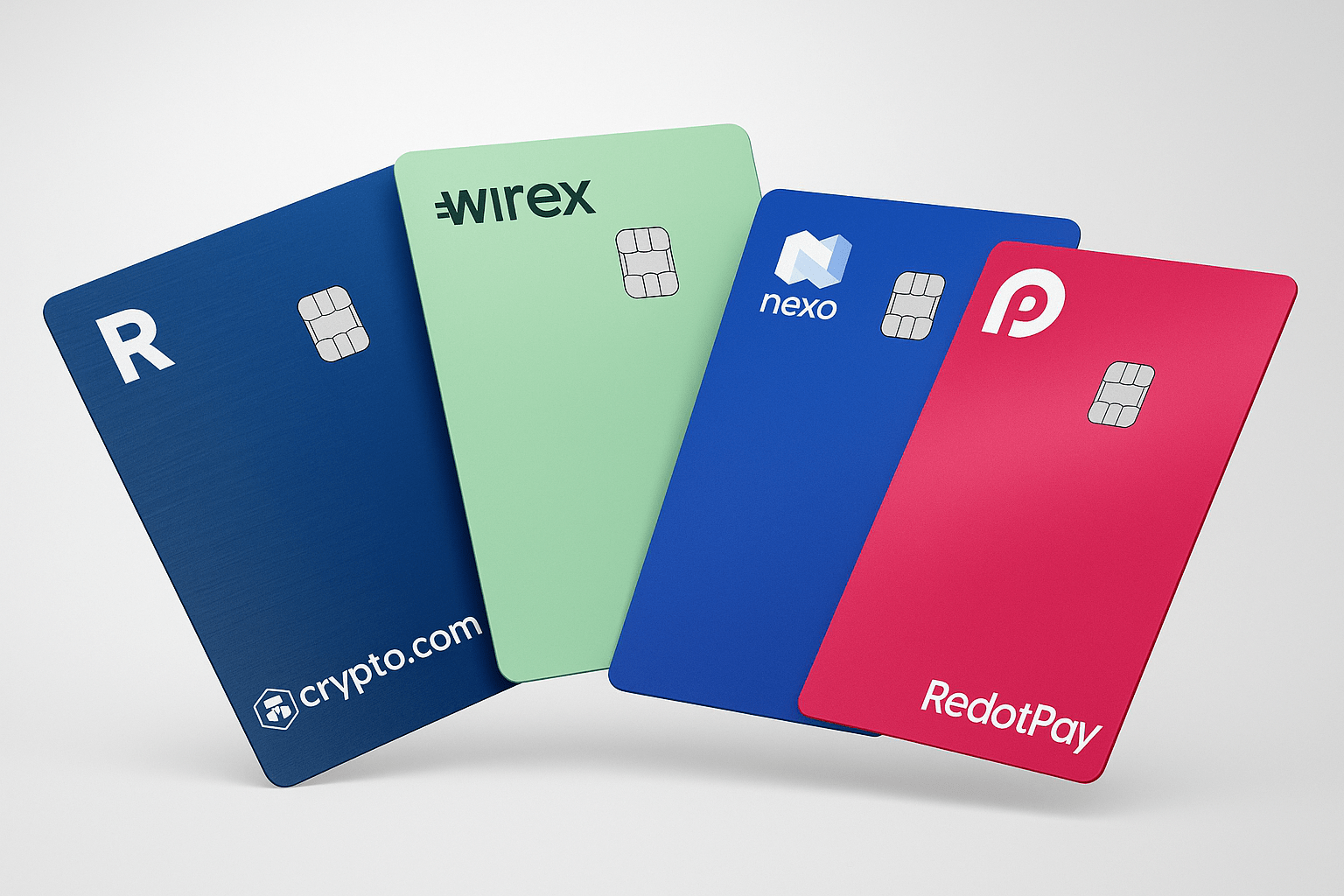
If you’ve been trying to figure out which are the best crypto debit cards for real, everyday use, this guide breaks down the top options, how their fees work, and who each card is really for — including my experience with RedotPay.
The best crypto debit cards are not just about flashy rewards. What actually matters is low fees, wide availability, clear limits, and predictable behaviour when you travel, shop online, or withdraw cash. This guide is designed to be practical so you can match the right card to your situation.
This article is for education only. Always double-check fees, limits and availability for your country before applying.
1. Quick refresher: how crypto debit cards work
A crypto debit card connects to your crypto or stablecoin balance. When you tap or swipe at a normal Visa or Mastercard terminal:
- your card provider converts your crypto or stablecoins into local currency in the background, and
- the merchant receives normal fiat (like USD, EUR, GBP or ZAR).
You still follow normal card network rules (like ATM limits and foreign exchange), but you’re funding the card with digital assets instead of a bank account. Many of the best crypto debit cards also add perks such as crypto cashback, yield on idle balances, or the ability to borrow against your crypto without selling.
Before using any crypto card, it’s worth tightening your basics:
2. What makes a great crypto card? (Selection criteria)
To decide which products deserve to be called the best crypto debit cards, it helps to use clear criteria:
- Fees: card issuance, monthly fees, FX, ATM and hidden conversion spreads
- Rewards: cashback or perks that are simple and realistic to use
- Availability: which countries are supported and which card network (Visa or Mastercard) is used
- On-/off-ramp: how easy it is to top up with crypto or fiat and withdraw cash where needed
- Custody model: whether funds sit in a custodial wallet or a non-custodial wallet where you hold the keys
- Use-case fit: everyday spending, travel, high-limit withdrawals, or long-term investors spending occasionally
With that in mind, let’s look at five strong contenders and how they compare.
3. Bleap Mastercard — low-fee, non-custodial everyday card
Best for: everyday spenders and travellers who want low fees, simple rewards and self-custody.
Bleap runs a non-custodial Mastercard where you keep assets in your own wallet until the moment you spend. That appeals to people who care about owning their keys but still want the convenience of one of the best crypto debit cards on the market.
- Fees: no monthly, FX or conversion fees; free ATM withdrawals up to a monthly cap
- Rewards: roughly 2% cashback in stablecoins on eligible purchases
- Custody: self-custodial wallet; you control your keys until you spend
- Use-case: daily spending, online payments and travel with stablecoins
If your priority is low friction and you like the idea of a Web3 wallet that plugs straight into a card, Bleap is one of the best crypto debit cards to consider first.
4. Nexo Card — for people who want to spend without selling
Best for: long-term crypto holders who want flexibility and yield.
The Nexo Card is built for people who don’t necessarily want to sell their crypto every time they spend. It has two modes:
- Credit Mode: you borrow against your crypto as collateral and spend the loan. Interest is charged on the borrowed amount instead of selling your coins.
- Debit Mode: you spend crypto or stablecoins directly from your Nexo account.
Key points:
- Global merchant support via major card networks
- A certain number of free ATM withdrawals each month, then fees afterwards
- No monthly fee, but rewards and interest rates depend on your Nexo loyalty tier and token holdings
If you already hold a decent crypto stack and want to unlock liquidity without constantly selling, Nexo can be one of the best crypto debit cards for that specific strategy — as long as you understand how borrowing against volatile assets works.
5. Crypto.com Visa — rewards-heavy card with tiered perks
Best for: users who enjoy optimising rewards programs and are comfortable with staking or subscriptions.
The Crypto.com Visa range includes multiple tiers, each with its own blend of cashback and lifestyle perks:
- Base tier: no monthly fee; modest cashback on everyday spend
- Higher tiers: better cashback, potential lounge access, and other perks in exchange for staking their CRO token or paying a monthly subscription
- Availability: widely available in regions like the US, EU, UK and parts of APAC (always confirm current coverage in the app)
Fees and rewards vary by region and tier, so this card suits people who are comfortable optimising reward structures and managing a platform token, rather than someone who just wants a simple low-fee card.
6. Wirex Card — global reach with flexible pricing
Best for: users outside the big US/EU hubs, frequent travellers, and people who prefer a “Web3 banking alternative”.
Wirex offers a debit card integrated with their multi-currency wallet, aimed at people who want to hold both crypto and fiat side by side.
- Plans: free standard tier plus paid premium tiers with higher cashback and benefits
- Rewards: Cryptoback™ rewards on card spend and potential savings bonuses on their native token
- Fees: low or zero annual fees on the base plan, with FX and ATM fees after free allowances
- Use-case: global everyday spending and travel, especially where traditional banks are restrictive
If you live in a region where some major crypto apps don’t offer cards yet, Wirex can be a solid bridge between your crypto holdings and normal spending.
7. RedotPay (RedotCard) — high-limit stablecoin card with strong global reach
Best for: users who value high limits and stablecoin spending — especially in regions where RedotPay is popular and well supported.
RedotPay is a stablecoin-focused card and payment app geared toward people who want robust spending power:
- Coverage: virtual and physical cards with usage across many countries, depending on region
- Spending power: high transaction and ATM limits compared to many retail-focused crypto cards
- On-ramp/off-ramp: P2P marketplace, fiat bank transfers, and cash withdrawals at supported ATMs
On the fee side, you should be aware of the following:
- There is often a cost to issue the card (different pricing for virtual vs physical cards)
- Conversion, FX and ATM fees apply, especially if you use the card heavily or across multiple currencies
- It’s a custodial model — funds sit with the company rather than in a self-custody wallet
In practice, many users find RedotCard very convenient for day-to-day spending and ATM access, especially when using stablecoins. Just make sure the fee schedule and limits line up with how you plan to use the card.
If you want to test it out, you can use my RedotPay referral link:
- Sign up with this RedotPay link
- Referral ID: s82gc
As always, never sign up for any financial product purely because of a referral. Use it only if the card genuinely fits your needs.
8. Side-by-side comparison of the best crypto debit cards
| Card | Best for | Typical fees* | Rewards | Custody |
|---|---|---|---|---|
| Bleap Mastercard | Everyday users & travellers | No monthly, FX or conversion fees; free ATM up to a cap | ~2% cashback in stablecoins | Non-custodial |
| Nexo Card | Investors who want to spend without selling | No monthly fee; loan interest in Credit Mode | Up to ~2% cashback (loyalty tier) | Custodial |
| Crypto.com Visa | Rewards hunters (staking/subscription OK) | No monthly fee on base tier; regional FX fees vary | Tiered cashback; extra perks on higher tiers | Custodial |
| Wirex Card | Global users & travellers | Free standard tier; FX/ATM fees after allowance | Cryptoback™ rewards & bonuses | Custodial |
| RedotPay (RedotCard) | High-limit spenders & ATM users | Card issuance; conversion, FX & ATM fees apply | Promotions & referral rewards | Custodial |
*Always confirm current fees and limits inside the official app before applying.
9. How to choose the right card for your situation
Before you pick from the best crypto debit cards on this list, ask yourself a few practical questions:
- Where do I live and travel? Not every card is available in every country, and some restrict certain regions.
- How often will I withdraw cash vs tap to pay? If you rely heavily on ATMs, ATM fees and limits matter more than cashback percentages.
- Do I care more about rewards or simplicity? Complex tier systems can pay well but require more management and staking.
- How comfortable am I with custodial platforms? If you want full self-custody, non-custodial options like Bleap may appeal more than purely custodial cards.
A “good” card should make your crypto life easier, not more stressful.
10. Safe setup: using crypto cards without breaking your strategy
Finally, the best crypto debit cards should support your passive income and long-term wealth plan — not sabotage it. A simple approach:
- Keep long-term investments separate. Use hardware or self-custody wallets for your main stack. For example, see the Ledger Wallet Setup Guide.
- Only load what you can afford to spend. Treat your card balance like a checking account, not your full portfolio.
- Prefer stablecoins for day-to-day spending. This reduces the impact of price swings every time you swipe.
- Track your spending and rewards. Many apps let you export statements for budgeting and tax reporting.
- Review fees every few months. Providers can change terms, so scan their fee page occasionally to avoid surprises.
Used wisely, crypto debit cards become a powerful bridge between your digital wealth and your real-world life — letting you actually enjoy the passive income you’re working so hard to build.