
Crypto security 2025 is no longer something beginners can treat as an advanced topic.
If you use crypto, hold stablecoins, explore DeFi, test wallets, follow airdrops, use exchanges, or interact with blockchain apps, security is part of the journey from day one.
That does not mean crypto should feel scary.
Instead, it means every beginner needs a simple security foundation before moving deeper into the crypto ecosystem.
Crypto gives users more freedom than traditional finance in many ways. You can hold assets in your own wallet, move funds across blockchain networks, interact with decentralized apps, and explore financial tools without needing a bank branch or broker in the middle.
However, that freedom also comes with responsibility.
When you control your own wallet, you are responsible for your keys, seed phrase, signing habits, device security, wallet permissions, and the websites you connect to.
For that reason, crypto security 2025 is not just about avoiding scams. It is about building the habits that allow you to participate in crypto with more confidence.
This guide will explain self-custody, wallet types, seed phrase safety, hardware wallets, DeFi approvals, transaction signing, scam prevention, exchange security, and practical routines beginners can use to protect their crypto and DeFi assets.
It also connects naturally with other Simple Passive Income guides, including the 10-Step DeFi Safety Checklist, Best On-Chain Crypto Tools, and DeFi Lending Protocols Explained.
Why Crypto Security Comes Before Crypto Opportunity
Crypto can open the door to many useful financial tools.
You can hold digital assets, use stablecoins, explore DeFi lending protocols, interact with decentralized exchanges, follow on-chain activity, and learn about tokenized real-world assets.
That is the exciting side.
Even so, one foundation comes before all of it: security.
Without a protected wallet, your strategy becomes fragile.
When a seed phrase is exposed, even strong research cannot protect the funds.
Likewise, one malicious transaction can damage a portfolio faster than a bad market move.
An exchange account with weak protection can also interrupt long-term plans through one avoidable mistake.
For that reason, crypto security and self-custody should not be treated as optional extras.
They are beginner skills.
Before someone tries to understand DeFi, passive income, tokenized real estate, staking, airdrops, lending protocols, or on-chain tools, they should first understand wallets, private keys, seed phrases, approvals, and account protection.
The goal is not to make crypto feel complicated.
Instead, the goal is to make crypto easier to use responsibly.
Good security is not paranoia. It is basic financial hygiene for the digital asset world.
What Self-Custody Means in Simple Terms
Self-custody means you control the private keys that give access to your crypto assets.
A crypto wallet does not hold your coins in the same way a physical wallet holds cash.
Your crypto exists on the blockchain. Your wallet helps you access and control it by managing private keys.
Investor.gov explains that crypto wallets store private keys or passcodes that allow access to crypto assets, rather than storing the assets themselves. You can read their investor bulletin here: Investor.gov crypto asset custody basics.
This point matters because control depends on keys.
If you control the keys, you control access.
When another company controls the keys, you depend on that company to give you access when needed.
This is where the common crypto phrase comes from:
Not your keys, not your crypto.
That phrase does not mean every beginner should immediately move everything into self-custody without learning first.
Rather, it means you should understand the difference between holding crypto through a platform and controlling crypto through your own wallet.
Custodial Accounts vs Self-Custody Wallets
Many beginners start with centralized exchanges because they are easier to understand.
You create an account, verify your identity, deposit money, buy crypto, and see a balance on the screen.
That setup can be convenient.
However, convenience comes with reliance on the platform.
When crypto sits on an exchange, the exchange usually controls the custody structure. You rely on the exchange to protect assets, process withdrawals, secure accounts, and remain operational.
Self-custody works differently.
With self-custody, you control the wallet keys yourself. That gives more direct control, but it also gives more responsibility.
| Setup | Who Controls Access? | Main Benefit | Main Responsibility |
|---|---|---|---|
| Custodial exchange account | The exchange or platform | Easier for buying, selling, and account recovery | You depend on the platform’s security and withdrawal process |
| Self-custody wallet | You control the private keys | More direct control over your crypto assets | You must protect your seed phrase, wallet, and signing habits |
Neither setup is perfect for every situation.
Custodial platforms can be useful for buying, selling, and learning.
Self-custody can be powerful for long-term control and DeFi access.
The smarter approach is to understand the trade-off before deciding where funds should sit.
A Practical Example: Exchange Balance vs Wallet Control
Imagine two beginners, Sipho and Lerato.
Sipho buys crypto on an exchange and leaves everything there.
His setup is simple because he only needs an email, password, and two-factor authentication to access his account.
He can trade quickly, although he depends on the exchange to process withdrawals and protect the account.
Lerato takes a different route.
After buying crypto on an exchange, she moves some of it to a self-custody wallet.
This gives her more direct control, but it also adds responsibility.
She must protect her seed phrase, avoid fake wallet apps, check addresses carefully, and understand what she signs.
Both people have responsibilities.
Sipho must protect his exchange account and understand platform reliance.
Lerato must protect her wallet and understand self-custody habits.
The lesson is simple:
Crypto security is not only about where your assets sit. It is also about whether you understand the responsibility of that setup.
The Three-Wallet Strategy: Hot, Warm and Cold
Many beginners use one wallet for everything.
That same wallet may handle daily swaps, long-term holdings, airdrops, DeFi activity, experimental platforms, and random token claims.
At first, this feels convenient.
Over time, it can create unnecessary exposure.
A better system is to separate wallet purposes.
This is where the hot, warm, and cold wallet strategy becomes useful.
Hot Wallet: Daily Activity
A hot wallet connects to the internet and is used for daily activity.
Examples can include browser wallets and mobile wallets such as MetaMask, Trust Wallet, and Rabby.
A hot wallet can be useful for small transactions, test amounts, learning, DeFi interactions, and exploring blockchain apps.
However, it should not hold your full portfolio.
Think of it like spending money.
You use it because it is convenient, not because it is the safest place for everything.
Warm Wallet: Planned DeFi Activity
A warm wallet sits between daily use and deep storage.
It may hold funds used occasionally for DeFi, staking, lending protocols, or other planned activity.
The key idea is separation.
Your warm wallet should not be the same wallet used for random links, unknown airdrops, risky testing, or experimental dApps.
This structure reduces the chance that one bad interaction exposes everything.
Cold Wallet: Long-Term Storage
A cold wallet is used for long-term storage and should stay away from frequent online activity.
Hardware wallets from providers such as Ledger and Trezor are common examples.
The purpose of a cold wallet is not convenience.
The purpose is protection.
A cold wallet should hold assets you do not need to touch often.
It should not connect to every new dApp, random token claim, or unknown platform.
The Wallet Separation Example
Let us make this practical.
Imagine a beginner has R30,000 worth of crypto exposure.
Instead of keeping all funds in one wallet, they may use a simple separation system.
| Wallet | Purpose | Example Use |
|---|---|---|
| Hot wallet | Small daily-use wallet | Testing dApps, small swaps, and learning transactions |
| Warm wallet | Medium-use DeFi wallet | Known platforms, moderate balances, and planned DeFi activity |
| Cold wallet | Long-term storage | Assets not needed for daily use |
This structure is not about showing off advanced security.
It is about limiting damage if something goes wrong.
If the hot wallet signs a bad transaction, the cold wallet should not be exposed.
When a test wallet interacts with a suspicious dApp, long-term holdings should remain separate.
That simple separation can make crypto security much more practical.
Seed Phrases Explained Clearly
When you create a self-custody wallet, you usually receive a seed phrase.
A seed phrase is often 12 or 24 words.
It acts as the master recovery key for the wallet.
If your phone breaks, your laptop fails, or your wallet app is deleted, the seed phrase can restore access to your wallet.
That makes it useful.
It also makes it extremely sensitive.
Anyone who gets your seed phrase can restore your wallet and move your funds.
Ethereum.org explains that wallets often provide a seed phrase and advises users to write it down somewhere safe rather than store it on a computer. You can read their wallet guidance here: Ethereum.org wallet basics.
For beginners, the rule should be simple:
Your seed phrase should stay offline, private, and protected from people, cameras, screenshots, cloud backups, and fake support staff.
The Right Way to Back Up a Seed Phrase
A seed phrase backup should be simple, physical, and carefully protected.
The goal is to make sure you can recover your wallet without giving attackers an easy way to steal it.
Good Seed Phrase Habits
- Write the seed phrase on paper or store it on a durable offline backup.
- Keep it away from phones, laptops, email, cloud storage, and screenshots.
- Use private physical storage locations that are not obvious to visitors.
- Protect the backup from fire, water, theft, and accidental discovery.
- Only enter the phrase when restoring your wallet inside a trusted wallet app.
- Refuse any request from support staff, friends, Telegram admins, Discord users, or strangers online.
Bad Seed Phrase Habits
- Taking a screenshot of your seed phrase.
- Saving it in your phone notes.
- Emailing it to yourself.
- Uploading it to Google Drive, iCloud, Dropbox, or any cloud storage.
- Typing it into a website claiming to “verify” or “sync” your wallet.
- Sending it to someone who claims they can help recover funds.
A real wallet provider, exchange, or support team should not need your seed phrase.
If someone asks for it, treat that as a major warning sign.
The Recovery Test Beginners Forget
Many people write down a seed phrase and assume everything is fine.
That is not enough.
A backup is only useful if it actually works.
Before storing meaningful funds, beginners should learn how wallet recovery works with tiny amounts or a test wallet.
The goal is to understand the process before an emergency happens.
A simple learning exercise may look like this:
- Create a new wallet with a tiny test amount.
- Write down the seed phrase offline.
- Remove the wallet from the app or use another device.
- Restore the wallet using the seed phrase.
- Confirm that the wallet restores correctly.
This exercise teaches an important lesson.
Your wallet app is replaceable.
Your device is replaceable.
Your seed phrase is not replaceable.
If the seed phrase is lost and no recovery method exists, access may be permanently lost.
Private Keys, Seed Phrases and Wallet Addresses
Crypto security becomes easier when beginners understand three basic terms.
Wallet Address
Your wallet address is like a public receiving address.
You can share it with someone who needs to send you crypto.
It does not give them control of your wallet.
Private Key
A private key gives control over assets connected to a wallet address.
It should stay private.
If someone gets the private key, they can control the funds.
Seed Phrase
A seed phrase can restore the wallet and generate the private keys connected to it.
This makes it extremely powerful.
Beginners sometimes confuse these terms.
The simple rule is this:
Wallet addresses can be shared. Private keys and seed phrases must stay private.
Hardware Wallets: What They Actually Do
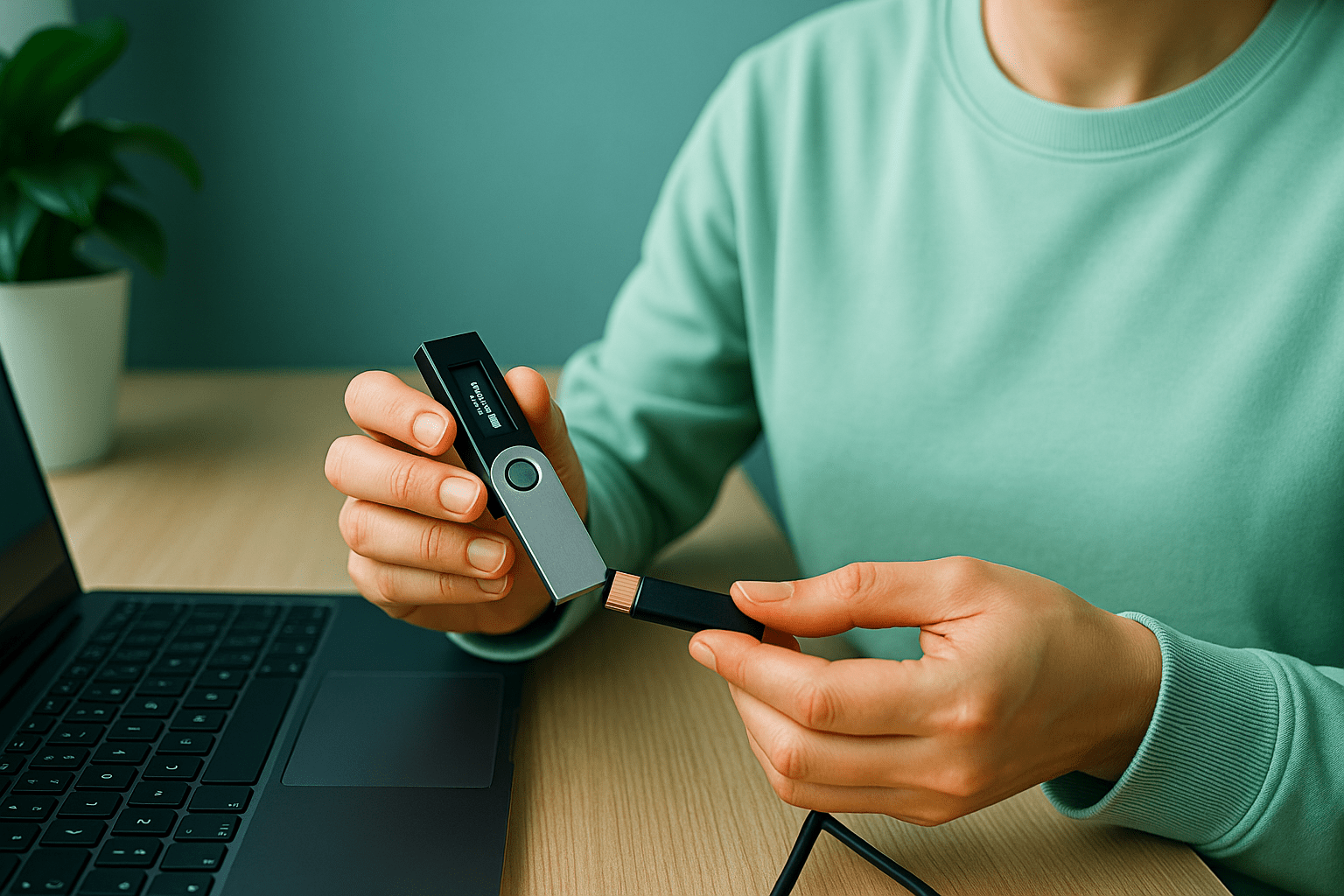
A hardware wallet is a physical device designed to keep private keys away from everyday internet exposure.
When used correctly, the private keys stay inside the device.
This means you can review and approve a transaction on the hardware wallet while the private key itself stays protected inside the device.
That setup can improve security for long-term storage.
However, a hardware wallet is not magic.
It cannot protect a seed phrase saved in your phone notes.
It also cannot think for you if you approve a malicious transaction without reading it.
In addition, buying a tampered device from an unknown reseller can create a problem before you even begin.
Good Hardware Wallet Habits
- Buy directly from the official manufacturer or a trusted official channel.
- Set up the device yourself.
- Write the seed phrase offline.
- Check transaction details on the device screen before approving.
- Keep firmware and official wallet software updated.
- Use the hardware wallet mainly for long-term holdings, not random experiments.
A hardware wallet works best as part of a broader security system.
It helps protect keys, but the user must still follow good habits.
Daily Crypto Security Habits That Actually Matter
Many beginners think crypto security requires complicated tools.
In reality, some of the biggest improvements come from simple daily habits.
Bookmark Important Websites
Fake websites are common in crypto.
A scammer may create a website that looks almost identical to a real exchange, wallet, bridge, or DeFi platform.
Instead of searching every time, bookmark official websites.
This reduces the chance of clicking a fake search result or sponsored phishing link.
Check the URL Before Connecting a Wallet
Before connecting a wallet, check the website address carefully.
Look for small spelling changes, extra characters, fake domains, or suspicious links.
This habit takes a few seconds and can prevent major problems.
Use Strong Passwords for Exchange Accounts
Use unique passwords for exchanges and important accounts.
Do not reuse passwords from social media, email, or old websites.
A password manager can help create and store strong passwords.
Enable Multifactor Authentication
Multifactor authentication adds another layer of protection to accounts.
CISA explains that MFA helps prevent unauthorized access by requiring a second verification method. You can read their guidance here: CISA multifactor authentication guidance.
For exchange accounts, email accounts, and other important logins, MFA is a basic security step.
Keep Devices Updated
Wallets, browsers, phones, computers, and operating systems should be kept updated.
Updates often include security improvements.
Ignoring updates for months can create unnecessary exposure.
How Wallet Approvals Work in DeFi
DeFi introduces another important security concept: approvals.
When you use a decentralized app, you may approve a smart contract to interact with tokens in your wallet.
For example, before swapping a token, a dApp may ask permission to spend that token.
This does not always move funds immediately.
Instead, it can give the smart contract permission to access that token according to the approval terms.
That is why approvals matter.
If you approve a malicious or unsafe contract, your wallet may be exposed.
Some approvals are limited.
Others may be unlimited.
Unlimited approvals can be convenient because they reduce repeated approval transactions, but they can also increase exposure if the contract later becomes risky or malicious.
Beginners should not blindly approve every transaction request.
Before approving, ask:
- Which website am I using?
- Which token am I approving?
- Which contract gets permission?
- Is the approval limited or unlimited?
- Do I understand why this approval is needed?
Tools such as Revoke.cash can help users review and revoke token approvals across supported networks.
Transaction Signing: The Moment That Matters
Most crypto mistakes happen at the moment of signing.
A wallet may ask you to approve a transaction, sign a message, connect to a site, or give permission to a contract.
Beginners often rush this step.
That habit can be expensive.
Signing is the point where intent becomes action.
Before signing, slow down and review what the wallet is asking.
Questions to Ask Before Signing
- Am I on the official website?
- Do I understand what this transaction does?
- Which asset is involved?
- Which network am I using?
- Is this a transfer, approval, swap, bridge, claim, or signature?
- Does the request match what I expected?
- Am I being rushed by a countdown, message, or stranger online?
If anything feels wrong, stop.
You do not need to sign every request that appears in your wallet.
Common Crypto Scams Beginners Should Recognize
Crypto scams often work because they trigger emotion.
Some create urgency.
Others use greed, panic, excitement, or fear of missing out.
Once emotion takes over, beginners may stop checking details.
Recognizing common scam patterns makes it easier to pause before acting.
Fake Airdrops
A fake airdrop may claim you are eligible for free tokens.
The website may ask you to connect your wallet and sign a transaction.
The goal may be to steal assets, approvals, or wallet access.
Real opportunities should still be checked carefully.
Free does not always mean safe.
Fake Support Staff
Scammers may pretend to be wallet support, exchange support, project admins, or recovery experts.
They may ask for your seed phrase, private key, screen share, or wallet connection.
Real support should not need your seed phrase.
Fake Wallet Apps
Scammers may create fake wallet apps or fake versions of real wallet software.
Only download wallet apps from official websites or official app store listings linked by the provider.
Check spelling, developer names, reviews, and official links.
Fake Investment Platforms
Some platforms promise high returns, guaranteed income, or easy passive income.
They may show dashboards, fake balances, testimonials, or referral systems.
Before depositing funds anywhere, understand who runs the platform, how income is generated, how withdrawals work, and what happens if the platform fails.
Malicious Links in Telegram, Discord and Social Media
Crypto communities can be useful, but they are also full of impersonators and scam links.
Be careful with direct messages, especially from people claiming to help.
Do not click random links just because they appear in a group chat.
How to Verify a Crypto Tool Before Using It
Before using any crypto tool, wallet, bridge, DeFi platform, or dashboard, build a habit of verification.
This does not mean you need to become a developer.
It means you should follow a basic checklist.
Verification Checklist
- Start from the official website, not a random link.
- Check the domain spelling carefully.
- Look for official documentation.
- Check whether the tool is widely recognized in the crypto community.
- Search for recent warnings, hacks, or fake versions.
- Use small test amounts before larger transactions.
- Check permissions after using the tool.
This habit is especially important when using DeFi.
For more research habits, the SPI guide on Best On-Chain Crypto Tools can help beginners learn how to use blockchain data and analytics more carefully.
Exchange Account Security
Even if you use self-custody, you may still use exchanges for buying, selling, deposits, withdrawals, and conversions.
That means exchange security still matters.
Protect Your Email First
Your email account is often the master key to many online accounts.
If someone compromises your email, they may try to reset exchange passwords, intercept login alerts, or gather personal information.
Use a strong unique password and MFA for your email account.
Use Strong Exchange Passwords
Do not reuse passwords.
Your exchange password should be unique.
If another website leaks a reused password, attackers may try it on your exchange account.
Enable Withdrawal Protection
Some exchanges offer withdrawal address whitelisting, anti-phishing codes, device management, and login alerts.
Use these features where available.
They can add friction, but security friction can be useful.
Review Account Activity
Check login history, connected devices, API keys, and withdrawal settings.
If you see activity you do not recognize, act quickly.
DeFi Security Habits for Beginners
DeFi gives users more control, but it also demands more attention.
If you interact with lending protocols, decentralized exchanges, token approvals, staking platforms, bridges, or liquidity pools, build these habits early.
Use a Separate DeFi Wallet
Do not use your long-term storage wallet for every DeFi interaction.
A dedicated DeFi wallet helps limit exposure.
Start With Small Test Transactions
Before moving a larger amount, send a small test amount first.
This is especially useful when using a new network, bridge, wallet, or protocol.
Understand the Network
Crypto assets can exist across different networks.
Sending funds on the wrong network can create serious problems.
Always confirm the network before sending or receiving funds.
Review Permissions Regularly
After using a dApp, review token approvals.
Remove permissions you no longer need.
Avoid Random Token Claims
If unknown tokens appear in your wallet, do not rush to sell or claim them.
Some scam tokens are designed to lure users into dangerous websites.
Ignore what you do not understand.
The Monthly Crypto Security Routine
Crypto security should become a routine, not a one-time setup.
A simple monthly review can help you stay organized.
Monthly Security Checklist
- Review wallet balances and confirm nothing looks unusual.
- Check token approvals and revoke unnecessary permissions.
- Review exchange account login history.
- Confirm MFA is still active on important accounts.
- Check connected devices and remove old sessions.
- Update wallet apps, browsers, devices, and operating systems.
- Confirm seed phrase backups still exist and remain private.
- Review your hot, warm, and cold wallet separation.
- Check whether any protocol you use has recent security alerts.
This does not need to take hours.
Even 10 to 20 minutes each month can make a difference.
The goal is to catch small problems before they become large ones.
Beginner Mistakes That Create Avoidable Risk
Many crypto losses come from simple mistakes rather than advanced hacks.
Fortunately, beginners can reduce a lot of unnecessary risk by understanding the patterns that cause problems most often.
Mistake 1: Keeping Everything in One Place
Using one wallet or one exchange account for everything creates a single point of failure.
A better approach is to separate funds by purpose, so one compromised area does not automatically expose the entire portfolio.
Mistake 2: Saving the Seed Phrase Digitally
Digital storage may feel convenient, but it creates unnecessary exposure.
Photos, notes, cloud backups, email drafts, and screenshots can become vulnerable through malware, account compromise, device theft, or accidental syncing.
Mistake 3: Trusting Links From Strangers
Urgent messages in crypto should always be treated carefully.
When someone sends a link and pressures you to act quickly, pause first and verify through official sources.
Mistake 4: Approving Transactions Too Quickly
Scammers often rely on users clicking approve without reading the request.
Before signing anything, check the website, network, asset, permission, and transaction purpose.
Mistake 5: Using One Wallet for Every Activity
A wallet used for experiments should not also hold long-term savings.
Wallet purpose matters because daily-use wallets face more exposure than storage wallets.
Mistake 6: Trusting Screenshots Instead of Verifiable Information
Screenshots can be edited, dashboards can be misleading, and testimonials can be faked.
Where possible, use official sources, on-chain data, trusted tools, and direct verification instead of relying only on images or claims.
A Practical Crypto Security Setup for Beginners
Here is a simple beginner-friendly setup that balances convenience and protection.
| Security Area | Beginner Setup | Purpose |
|---|---|---|
| Unique password and MFA | Protects account recovery and exchange logins | |
| Exchange | MFA, withdrawal protection, and anti-phishing tools where available | Protects buying, selling, and fiat access |
| Hot wallet | Small balance only | Daily use, learning, and small transactions |
| Warm wallet | Known DeFi interactions only | Medium-level activity with better separation |
| Cold wallet | Long-term holdings | Storage for funds not needed daily |
| Seed phrase | Offline physical backup | Wallet recovery and long-term access |
| Permissions | Monthly approval review | Reduces old smart contract exposure |
This setup is not perfect for everyone.
However, it gives beginners a practical starting structure.
Security becomes easier when every wallet and account has a clear job.
Join the Weekly SPI Newsletter
Practical insights. Real opportunities. Zero fluff.
How Security Supports DeFi and Passive Income
Crypto security is not separate from DeFi and passive income.
It is the foundation that makes responsible participation possible.
A DeFi lending protocol requires wallet security because users need to connect wallets, approve transactions, and manage positions carefully.
Staking also depends on key security because access to the wallet or validator setup must remain protected.
Stablecoin users need account discipline, wallet separation, and awareness of where assets are held.
Tokenized real estate adds another layer because investors must understand custody, platform structure, and legal rights.
On-chain tools can also create risk when users connect wallets to the wrong websites or approve permissions without checking them.
For that reason, the SPI approach starts with education.
Understanding the tools should come before chasing opportunities.
Reading the transaction request should come before signing.
Learning custody should come before storing long-term holdings.
Security is not the opposite of opportunity.
Instead, it is what allows beginners to participate with more confidence.
Readers who want to go deeper into DeFi safety can also read the 10-Step DeFi Safety Checklist.
The Simple Passive Income Approach
At SPI, the goal is not to make crypto sound complicated.
Our goal is to make crypto easier to understand.
Security and self-custody are part of that mission because every beginner needs a strong foundation before using more advanced tools.
Nobody needs to master everything on day one.
However, meaningful amounts of money should not enter the crypto ecosystem before the basic safety habits are clear.
Start with the foundation:
- Understand the difference between custodial platforms and self-custody.
- Protect your seed phrase offline.
- Separate wallets by purpose.
- Use strong account protection.
- Check URLs before connecting wallets.
- Review transactions before signing.
- Revoke permissions you no longer need.
- Build a monthly security routine.
These habits are not glamorous.
They are practical.
More importantly, they help beginners stay in the game long enough to keep learning.
Final Thoughts
Crypto security 2025 is about building the habits that protect your ability to participate in the digital asset world.
Without security, every opportunity becomes fragile.
Better habits give beginners more confidence and less confusion.
The most important lesson is simple: control what you can control.
That starts with protecting your seed phrase, using the right wallet for the right purpose, and reviewing transactions before signing.
Long-term holdings should stay away from daily-risk activity.
Permissions also need regular checks, especially after using DeFi apps or unfamiliar tools.
When someone pressures you to act quickly, slow down and verify first.
Crypto gives users more freedom, but that freedom comes with responsibility.
Self-custody is not only about holding your own keys.
It is about building the habits that make digital ownership safer, clearer, and more practical.
When you protect your keys, your wallets, and your signing habits, you protect your ability to participate in crypto with confidence.